Listeners:
Principales oyentes:
-
play_arrow
INTENSA FM
-
 play_arrow
London Calling Podcast Yana Bolder
queue_music


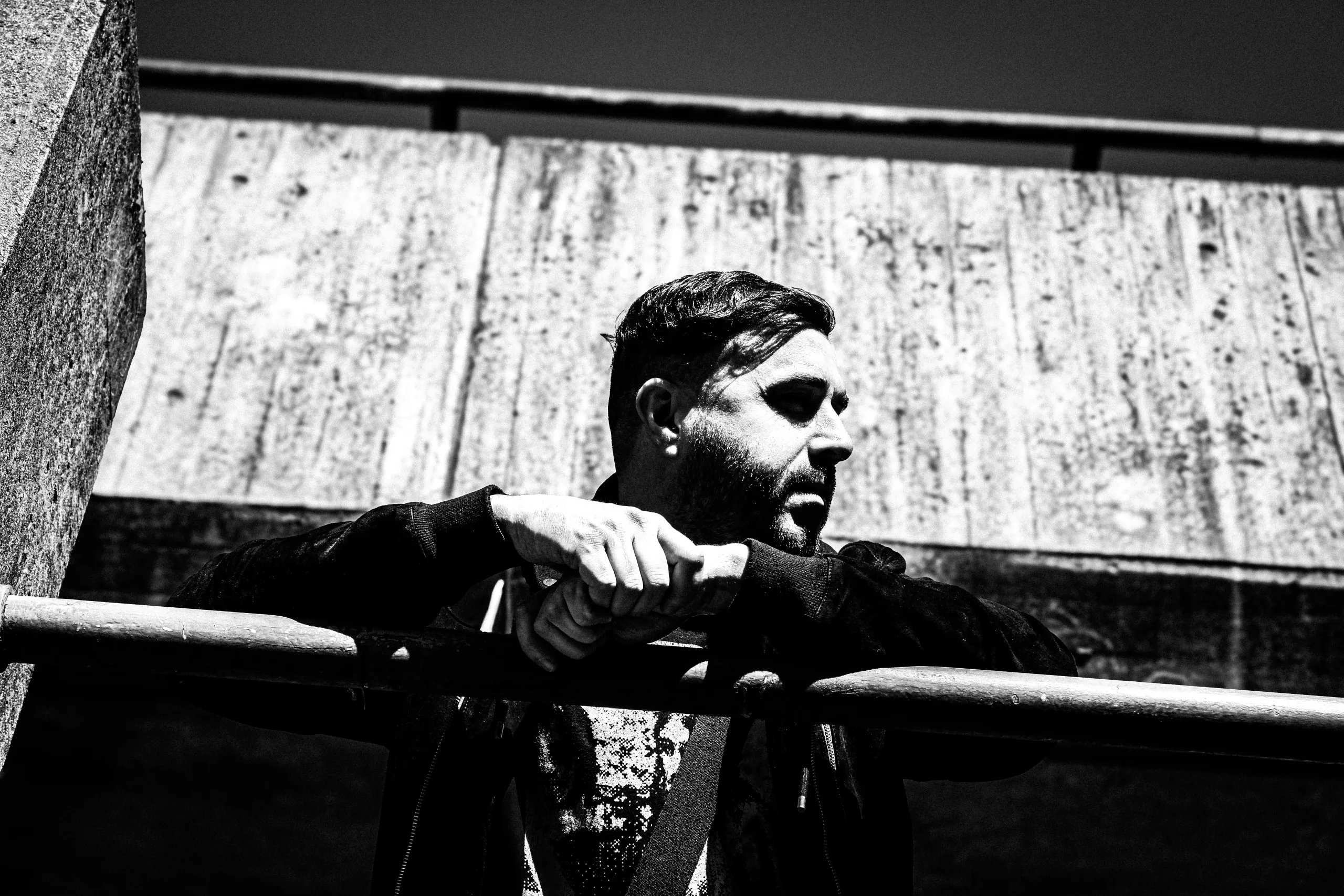
With One Knob Per Function, 7XINS doesn’t just document a live set—he captures a period of transition, release, and raw sonic expression. Compiled from club recordings and molded into a cohesive album, this debut LP on Severn Electronics is as much a farewell to an old live setup as it is a declaration of a new creative phase. In this interview, 7XINS unpacks his approach to minimal control with maximal impact, the philosophy behind his aggressive sound, and why techno—at its most chaotic—is still deeply human.
One Knob Per Function is raw and immersive. What does the title mean to you personally and technically?
The concept of this LP is much different to my studio work (much of which is still be released in the near future). My work is usually conceptually based on politics and other areas of interest and fascinations I have, such as books and history and geo politics so its a bit of a change from that. I tried to think of ways to intertwine it but I didn’t feel like it was right to do so because whilst I feel dance music is highly political at its core given its history and fundamentals, it has also been a place of escape from the harsh realities of the real world, a place of joy and freedom, so I really just wanted to focus on that energy for this one.
As many will know “One Knob Per Function” refers to audio hardware where each knob just has one purpose and doesn’t rely on layers or menu diving to change its function, this is something I prefer to use a lot especially playing live, I feel like there is a lot to do already without diving through menus. For me the easier and more simple you keep it the more fun is to be had and at the end of the day thats what people want to see when they see you play live they want to see you have fun, when you have fun the performance translates and transcends which makes easier to communicate to a crowd.
Not sure if anyone can notice them but there are a few samples from Blade Runner, (one of my favourite movies) in the live set, a few soundscapes and some modulated vocals. I used some quotes from Blade Runner in the text inside the cassette artwork, I feel like the name points towards machines, and live sets are machines with an human element of control, I suppose this ended up as a small concept intertwined within the work that wasn’t planned at all.
As someone deeply rooted in live performance, what challenges or freedoms come from working only with hardware?
Limitations are your freedom, however strange that sounds. If you have too many options and possibilities it can lead to a never ending cycle of wanting to change an move stuff around, this can essentially lead to a lot of wasted time and work when in the end the result won’t be too far different from one method to another. So for me imposing restrictions on yourself can really make you focus and push one method to its limits.
There are quite a few challenges that come with working only with hardware. One you can sometimes end up with quite a bit of kit and a lot of cabling and routing that could all essentially just be done in a computer or an iPad. The mix down for instance, with hardware and many different sound sources it can be harder to achieve a good mix especially if you are using some gnarly raw elements like modular synths which have high gains and cut right through and then mixing with samples that come from say the Octatrack or another sampler. With a DAW you can easily apply a Master bus compressor at no extra weight or cost but in hardware that means carrying another piece of potentially expensive gear, more cabling and more routing. Transportation is also difficult, massively respect all the touring live artists out there! It’s a lot of effort! One
last thing I just saw a post from Jako Jako who is an amazing producer and live artist, she had a piece of critical hardware fail on here and had to cancel her gig. Thats incredibly frustrating ad every live artists first nightmare, some bits of kit you cannot back up any of the contents and they are not easy to get hold of if one fails. I suppose this makes things a lot more fun and involved though, its really satisfying when it all comes together. It makes it worth it in the end!
You mentioned that each track is a timestamp from a different night—how did you approach selecting which nights and recordings to feature?
I went through my favourite recordings and picked my own favourite parts that I had clear memories of. I also selected some that my close friends have brought up as memories they had of my sets. It was quite straight forward, I think I picked too many but I had more to start with.
There’s a lot of chaos in the textures you build. How do you find balance between control and surrender on stage?
I think that tension between chaos and control is the essence of live performance for me. I build the setup to give myself as much tactile control as possible everything’s positioned with intention. That’s the control part. But once you’re on stage, the environment itself the sound system, the crowd, the energy in the room can at times be hostile in terms of temperature moisture etc this kind of forces you to surrender a little. Things behave differently in the moment. Sounds bleed, elements clash in ways you didn’t predict, in these moments just letting go by letting the chaos breathe along with the environment. I think my best sets have come from moments where I stopped trying to make it perfect and just commit to the moment, flaws and all.
The sound has a weight and physicality to it. How do different sound systems or club acoustics affect your live sets?
I think that given its quite raw nature it can aesthetically fit on both really defined systems and also systems that are quite loose in nature. Stereo image can be an issue, it can be hard to translate sometimes as its so wide at times. One thing though if a system has lots of headroom I can really experiment with the low end more pushing certain frequencies, this can be really fun and ope up new possibilities!
What led to the creation of Severn Electronics, and how does it reflect your vision beyond this LP?
I think it was out of necessity for me to be honest, part of finding my sonic identity or perhaps just rather honing in on it. I knew what I wanted to say musically but I just didn’t really feel like I had anywhere I could express that. Most of the time, I don’t really write music with the dance floor in mind, if it works on the floor then great, but a lot of the time its more about the message in the music for me. What do I want to say sonically? What do I want to say with the artwork, message and the concept you know? It’s very much a self expression project where I get to weave my personal interests in certain subjects with my music, its purely a way of expressing myself and releasing that creative energy. Much of my music is more listening music but
to my surprise quite a few artists have played my music in clubs like Tresor, Berghain and Womb which when I found out it was an extremely satisfying and validating experience, it was a boost of confidence that you don’t always have to aim for the functional form of dance music for people to play it. If it touches people they can find a way to make it work (within reason of course). That being said I think I am finding the confidence and middle ground to experiment with both listening and some more clubby stuff. I have plans to release other artists with the same concepts in mind, a mixture of listening music that has a message that the artist wants to express and some music that can be played in a club environment but takes some more risks than a track that is aimed purely for the dancer floor. So beyond this LP I will continuing on with the idea of expressing myself and my interests and releasing other artists who share that same philosophy and hopefully building a really nice discography of music that can be listened to in environments other than the club. I even have some visions of it becoming a collective one day but who knows! I am quite excited about it.
Finally, what’s one lesson or realisation you’ve gained during this six-year cycle of live experimentation?
I think one of the main things I have learned is that cleaner or more defined is not always better. If that makes sense. Music for me is general is a very emotional experience and I think dance music and more so techno in its earlier days was so raw, especially due to the tools available then. I have realised that there is space for that raw, undefined, sometimes uncontrolled power and chaos that can touch people emotionally. I feel like the crowd can feel this rawness of live sets in a different way to DJ sets and I think its good to keep that alive. Another realisation I have had is that there is no end goal, only to keep evolving.
orderlink
https://7xins.bandcamp.com/album/one-knob-per-function-live-cuts-selp001
socials
https://www.instagram.com/7xins_live/
Contenido por NODIVADJS MAG
Publicado originalmente en NODIVADJS Magazine
Underground, opinión, cultura de club y producción musical.

Próximos Programas
Lo Más Leido

Lluis Ribalta celebra sus 20 años con su álbum debut Bring In Back en Rawsery

FRANK TRAX: TRES DÉCADAS MOLDEANDO LA MÁQUINA

LaGore lanza el videoclip de “Deseo pa’ ti”

La primera experiencia interactiva de fiesta de Donnie Darko del mundo se vuelve global

MIND ENTERPRISES lanza el nuevo álbum NEGRONI LOVE